You can start a cleaning business for under $500 and book your first paying client within 30 days. No storefront, no employees, no business degree required. Just a car, some cleaning supplies, and a willingness to do the work.
This guide walks you through the seven steps to go from “thinking about it” to “officially open for business” — registering your LLC, getting insured, setting your prices, and landing those first clients. Every step includes actual dollar amounts, not vague advice.
Some links in this article are affiliate links, which means we may earn a commission if you sign up — at no extra cost to you. We only recommend products we’d use ourselves.
What Kind of Cleaning Business Should You Start?
Before you register anything, decide what you’re actually going to clean. There are three realistic options for beginners, and each one suits a different situation.
Residential house cleaning is the most common starting point. You clean people’s homes on a recurring schedule — weekly, biweekly, or monthly. It’s stable because once a client books you, they usually stick around for months or years. Most solo cleaners build their entire business on recurring residential clients.
Maid service is essentially the same work but positioned as a brand. You answer the phone with a business name, you might have a website with online booking, and eventually you hire other cleaners to work under your company. If you’re planning to grow beyond yourself, this is the path. The distinction matters mostly for how you market — “Sarah’s cleaning” versus “Spotless Home Maid Service.”
Airbnb turnover cleaning is cleaning short-term rentals between guests. The pay per clean is lower ($75–$200), but one property manager with 10 listings can keep you busy. The downside: tight turnaround windows and unpredictable schedules. You might get a call at noon saying a guest checked out and the next one arrives at 4 PM.
My recommendation for most people starting out: recurring residential clients. It’s the most predictable income with the least overhead. You can always add Airbnb turnovers or commercial work later once your schedule is full.
This guide focuses on residential cleaning. If you’re interested in commercial or janitorial work, that’s a different business model with different startup costs, equipment, and client acquisition — we cover that separately.
Step 1 — Decide on Your Services and Pricing
You need a price list before your first client asks “how much do you charge?” Here are the three services most residential cleaners offer:
- Standard clean — the recurring visit. Kitchens, bathrooms, floors, dusting, vacuuming. This is your bread and butter. Price range: $100–$200 per visit depending on home size and your market.
- Deep clean — a thorough first-time clean for new clients. Inside appliances, baseboards, behind furniture, window sills. Takes longer, costs more. Price range: $200–$400.
- Move-out clean — cleaning a home for lease turnover. Tends to be the dirtiest work but also the highest per-job pay. Price range: $250–$500.
Most new cleaners worry they’re charging too much. You’re probably not. The residential cleaning market hit $73.5 billion in 2025 according to Research and Markets, growing at nearly 9% annually. Clients expect to pay fair rates for reliable, trustworthy service.
Flat-rate pricing beats hourly for recurring clients. Here’s why: when you charge hourly, you actually get penalized for being efficient. The faster you work, the less you earn. With a flat rate, you get rewarded for speed.
Let’s run the numbers. A 3-bedroom, 2-bathroom standard clean takes about 2.5 hours once you have a routine. At a $150 flat rate, your effective hourly rate is $60/hour. If you get faster and finish in 2 hours, that jumps to $75/hour. With hourly pricing at $35/hour, the same job only pays $87.50 — no matter how good you get.
Set your prices based on what other cleaners charge in your area (check Yelp, Thumbtack, and Google for local rates), then adjust as you get faster and learn which jobs are worth your time.
For a deeper breakdown of pricing strategies, check out our full guide to pricing cleaning services.
Step 2 — Register Your Business (LLC + EIN)
An LLC (Limited Liability Company) does one important thing: it separates your personal assets from your business. If a client sues your cleaning business, they can go after the business account — but not your personal savings, your car, or your house.
Can you skip this and operate as a sole proprietorship? Technically, yes. But one lawsuit from a slipped client or a damaged antique could reach your personal bank account. For most cleaners, the $50–$250 state filing fee is worth the protection.
Here’s how to set up your LLC:
- Choose your business name and check availability on your state’s Secretary of State website
- File your Articles of Organization — this is the official LLC paperwork. You can do this yourself on your state’s website, or use a service like ZenBusiness that handles it for $0 plus state fees
- Get your EIN (Employer Identification Number) — free through IRS.gov. Takes about 10 minutes online. You’ll need this for your business bank account and taxes
- File your Beneficial Ownership Information (BOI) report with FinCEN — required under the Corporate Transparency Act for most new LLCs
The DIY route costs nothing beyond the state filing fee. If you’d rather not deal with the paperwork, ZenBusiness handles the filing for $0 plus state fees on their Starter plan. They also include a year of compliance monitoring so you don’t miss annual filings or state deadlines. It’s the route most of our readers take — not because the DIY option is hard, but because the paperwork is tedious and the cost difference is minimal.
For a full walkthrough of the registration process, read our full walkthrough for registering your LLC.
Step 3 — Get Insurance Before Your First Job
You need general liability insurance. Not “should consider it” — need it.
Picture this: you’re cleaning a home office and knock a laptop off the desk. Screen shattered, data lost. Without insurance, that’s $1,500+ out of your pocket. Or a client’s guest slips on a floor you just mopped and breaks a wrist. Without insurance, you’re looking at a potential lawsuit with no protection.
General liability covers three things:
- Property damage — you break something in a client’s home
- Bodily injury — someone gets hurt because of your work
- Completed operations — problems that show up after you leave (like a cleaning product that damages a countertop finish)
Cost: $30–$60/month for a solo cleaner. According to NEXT Insurance’s 2026 rate data, 54% of their cleaning business customers pay between $40 and $50 per month for general liability coverage. That’s roughly the cost of one hour of cleaning per month — a small price for the protection.
Bonding is separate from insurance. A surety bond is essentially a theft guarantee — it protects your clients if something goes missing from their home. Costs $100–$300/year. Plenty of solo cleaners skip bonding at first, but clients will ask “are you bonded and insured?” You want to say yes without hesitating. Being bonded and insured immediately sets you apart from the person advertising cleaning on Craigslist with no credentials.
NEXT Insurance lets you get a quote online in about 5 minutes. You answer some basic questions about your business, choose your coverage limits, and pay. Your certificate of insurance is available immediately after purchase — useful when a new client or property manager asks for proof before booking. For part-timers who aren’t cleaning every week, Thimble offers pay-per-month coverage so you’re not locked into an annual policy.
For a deeper look at coverage types and what to watch for in your policy, read our guide on what insurance costs and what it covers.
Step 4 — Set Up the Business Basics
These aren’t glamorous, but knock them out in one afternoon. You’ll be glad you did when the first client call comes in.
Business bank account. Open a separate checking account for the business. This isn’t optional — mixing personal and business money is both a tax nightmare and a liability risk. If you ever get audited or sued, co-mingled accounts can “pierce the veil” of your LLC protection, meaning a court could treat your personal and business assets as the same thing. Most banks offer free business checking with no minimum balance. Bring your LLC paperwork and EIN to open the account.
Business phone number. You don’t want client calls coming to your personal cell at 9 PM. Grasshopper gives you a professional business number with a separate voicemail greeting for about $28/month. It rings to your existing phone — no second device needed. You can set business hours so calls go straight to voicemail on your off days. OpenPhone is another solid option with similar features.
Business email. A free Gmail account with your business name works fine at the start. Something like [email protected] looks more professional than your personal email. You can upgrade to a custom domain email later when you build a website through Squarespace or a similar platform.
Business cards. Yes, people still use them — especially in the cleaning business. Clients expect to see one, particularly older homeowners who might refer you to their neighbors. Vistaprint prints 250 cards for about $20. Keep it simple: your name, business name, phone number, and “Licensed & Insured.” That last line builds instant trust.
Step 5 — Buy Your Cleaning Supplies
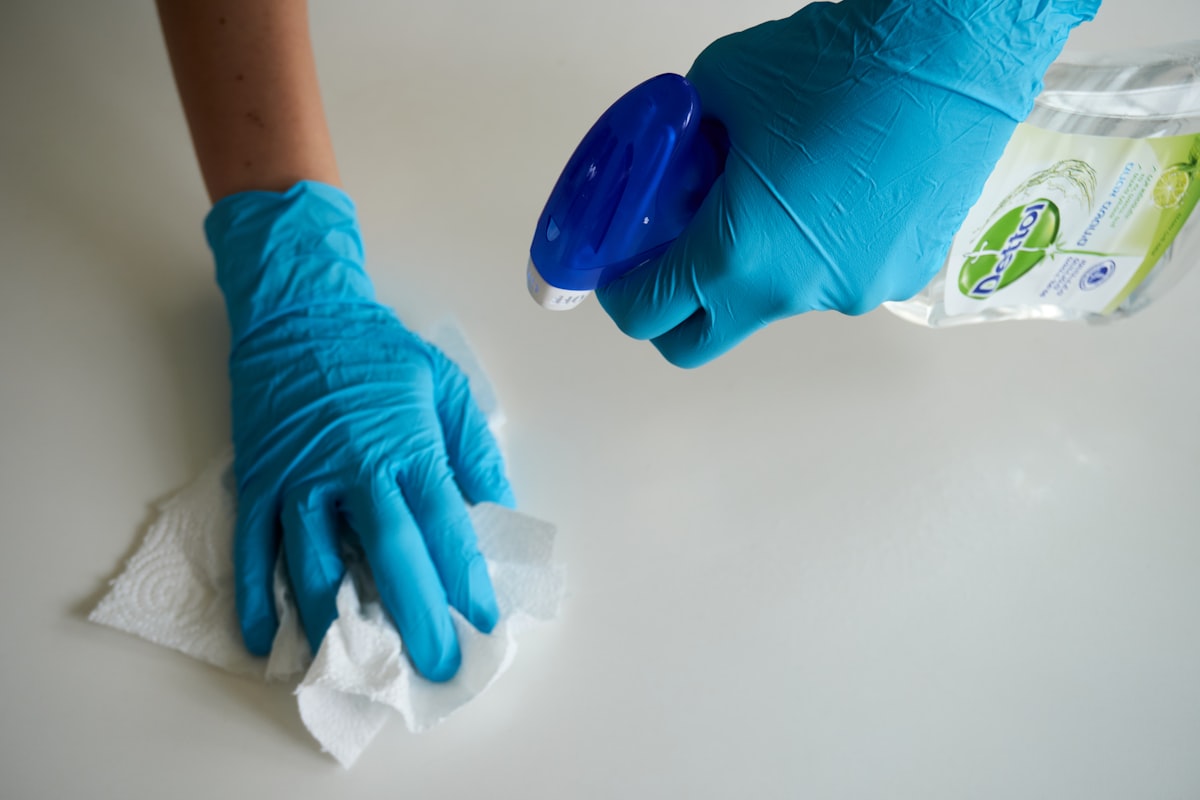
Budget $150–$300 to stock your first cleaning kit. You don’t need commercial-grade equipment on day one — you need reliable basics that get the job done. Here are the non-negotiables:
- Microfiber cloths (24+) — buy in bulk. You’ll use 6–10 per house (different colors for kitchen, bathroom, and general surfaces so you’re not cross-contaminating). About $15–$25 for a 24-pack on Amazon
- Flat mop system — an O-Cedar or similar flat mop with washable pads. Way faster than a string mop and easier to maintain between jobs. Around $30
- HEPA vacuum — this is your biggest startup expense. A decent upright with HEPA filtration runs $150–$250. It’s worth spending more here because a weak vacuum doubles your time on carpeted rooms. Once you can afford it, a ProTeam backpack vac ($300+) will cut your vacuuming time in half
- All-purpose cleaner, bathroom disinfectant, glass cleaner — start with commercial concentrates from a janitorial supply store (they’re cheaper per use than retail spray bottles from Target). About $30–$40 total
- Cleaning caddy — a basic bucket or caddy to carry supplies room to room. Saves you dozens of trips to the car. $10–$15
What to skip on day one: steam cleaners, floor buffers, specialty carpet machines. You can always add these later when specific jobs require them, and plenty of solo cleaners never need them at all.
Eco-friendly option: non-toxic, plant-based products are increasingly popular with clients. People who request green cleaning will often pay a 10–20% premium for it. If you want to position yourself in a less crowded niche, this is a smart way to differentiate. Brands like Seventh Generation and Mrs. Meyer’s are well-known, or you can use concentrated eco products from companies like Ecover.
For the complete gear list with specific product recommendations and links, check out our complete supplies list.
Step 6 — Get Your First Clients
You don’t need to spend money to get clients 1 through 10. Here’s what actually works, in order of effectiveness.
Your personal network. Text everyone you know. Post on Facebook, Instagram, wherever you’re active. Here’s a script that works:
“Hey! I just started a house cleaning business. If you or anyone you know needs a reliable cleaner, I’d love to help. I’m offering 20% off the first clean for friends and family. Referrals are appreciated!”
This feels awkward. Do it anyway. Your first 3–5 clients will almost always come from people you already know. That 20% discount on a first clean is not lost revenue — it’s the cheapest advertising you’ll ever do, and it buys you your first reviews.
Google Business Profile. This is free and takes about 20 minutes to set up through Google Business. Once verified, you show up in local Google searches and Google Maps when someone types “house cleaning near me.” This single listing will generate leads for years if you maintain it. Fill out every field, upload photos of your work (before and after shots are gold), and — this is critical — ask every satisfied client to leave a Google review. Five reviews with 5 stars puts you ahead of half the cleaners in most towns.
Nextdoor. Cleaning is one of the most-requested services on Nextdoor. Create a business page and respond to recommendation requests in your area. It’s hyperlocal, which is exactly what you want. When someone in your neighborhood asks “who cleans houses around here?” you want your name in that thread.
Real estate agents. One good relationship with a local agent can mean 2–4 move-out cleans per month, every month. Drop off business cards at real estate offices and introduce yourself to agents at open houses. Agents always need reliable cleaners for listings and lease turnovers, and they’ll call you repeatedly if you do good work.
The referral engine. Once you have a few clients, offer a $25 credit toward their next clean for every referral that books. This costs almost nothing compared to paid ads ($50–$100+ per lead on Google Ads), and referred clients tend to stick around longer because they already trust you through the person who sent them.
For the full playbook on early marketing, read our guide on 5 free ways to get your first clients.
Step 7 — Set Up Your Scheduling and Payments
You can start with text messages and a phone calendar. Add Venmo or Zelle for payments. Honestly, this works fine for clients 1 through 5.
Once you hit 10+ recurring clients, things start falling through the cracks. A missed appointment because you forgot to update your calendar. A forgotten address because it was buried in a text thread from three weeks ago. An invoice you never sent because you cleaned five houses that day and ran out of energy. That’s when scheduling software pays for itself.

If you’re solo and don’t want to spend money: FieldVibe is genuinely free for solo cleaners. It handles scheduling, client reminders, and time tracking. No catch, no credit card required. It’s not the most polished app you’ll ever use, but it does the job and it’s free. Worth starting with.
If you’re ready for something more professional: ZenMaid starts at $19/month and is built specifically for maid services — it’s the only major scheduling platform designed exclusively for cleaning businesses. Clients can book online through your website, you get automated SMS reminders (which cut no-shows dramatically), and it syncs with your calendar. Over 3,000 maid services use it, and the cleaning-specific features — like recurring schedule templates, team assignment, and automatic rebooking — make it worth the cost once you have 10+ regular clients.
When you grow beyond solo: Jobber is more powerful and works better when you hire your first employee or add services like carpet cleaning or pressure washing alongside your regular cleaning. It’s more expensive ($39–$199/month depending on the plan) but handles quoting, invoicing, client management, and online payments in one place. It also has a strong client portal where your customers can approve quotes and pay invoices without calling you. Worth looking at when you’re ready to scale past a solo operation.
For a full breakdown of your options, read our best cleaning software for beginners comparison.
How Much Can You Make?
This is the question everyone wants answered, so let’s do the actual math.
Full-time solo cleaner scenario:
5 days per week, 3 houses per day at $150 flat rate = $2,250/week or roughly $9,000/month gross.
Monthly expenses:
- Supplies (cloths, cleaners, trash bags): ~$15/job x 60 jobs = $900
- Gas and travel: ~$20/day x 20 working days = $400
- Insurance: $50
- Phone and software: $50
- Miscellaneous (car maintenance, replacements): $100
- Self-employment tax set-aside (~25%): $1,900
That leaves roughly $5,600/month net, or $67,000/year before income taxes, assuming you work 48 weeks.
More conservatively — and more realistically for your first year — you probably won’t fill 3 houses every single day right away. A realistic first-year net for a full-time solo cleaner is $40,000–$60,000, depending on your market, how fast you build your client base, and how many weeks you take off.
For context, the Bureau of Labor Statistics reports the median annual wage for maids and housekeeping cleaners at around $31,000 — but that number includes part-timers and employees earning hourly wages at hotels and cleaning companies. Self-employed cleaners who build a recurring client base and charge flat rates typically earn well above that median.
The ramp-up. If you add 2 new recurring clients per week, you can hit 20 regular clients in 2–3 months. That’s enough to fill your schedule. Many cleaners start part-time — weekends and evenings after their day job — and go full-time after they lock in 10 recurring clients. That transition point usually hits around month 2–3 if you’re actively marketing.
For a complete income breakdown with part-time, full-time, and team-based scenarios, check out our guide on how much a cleaning business makes.
Your 30-Day Launch Checklist
Here’s every step above condensed into a week-by-week timeline:
- Week 1: Choose your service type and write your initial price list
- Week 1: Register your LLC (or sole proprietorship to start) and apply for your EIN
- Week 1: Get general liability insurance — get a quote from NEXT Insurance in 5 minutes
- Week 2: Open a business bank account
- Week 2: Set up your Google Business Profile
- Week 2: Order business cards from Vistaprint
- Week 2: Text and post to your personal network announcing your new business
- Week 3: Book your first client — even at a 20% discount to earn that first review
- Week 3: Set up FieldVibe or ZenMaid for scheduling
- Week 4+: Ask for a Google review after every single clean
That’s the whole roadmap. None of these steps require a business degree, a big savings account, or anyone’s permission. The residential cleaning industry is growing fast and shows no signs of slowing down. There’s plenty of demand in virtually every market — you just have to show up, do good work, and ask for referrals.
Want a printable version? Download our free Cleaning Business Startup Checklist (PDF) — a one-page version of every step above that you can check off as you go.